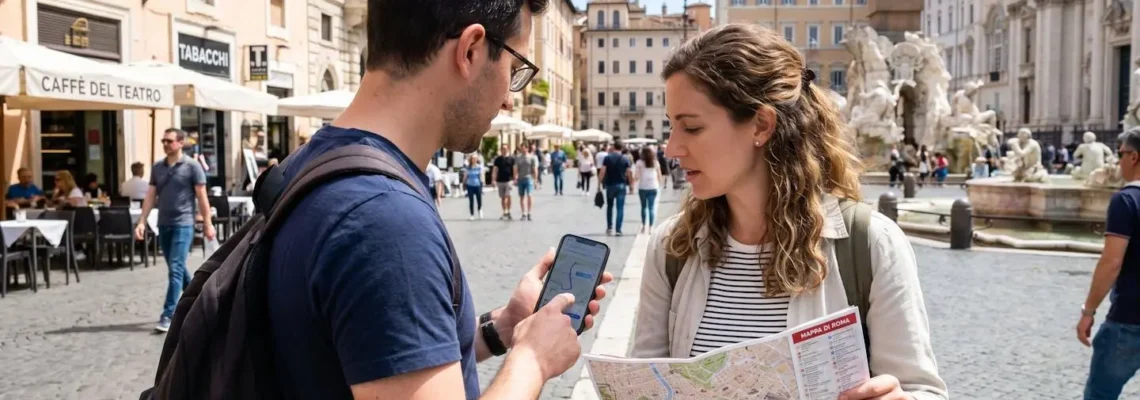
Visiting multiple Tuscany cities in a single trip presents a logistics puzzle most first-time travelers underestimate. Renting a car means navigating unfamiliar Italian roads and restricted city centers. Trains require deciphering schedules across multiple operators. The solution gaining traction among international visitors combines transportation and cultural education in one package: intercity bus tours with multilingual onboard commentary connecting Florence, Pisa, Siena, Lucca, and San Gimignano. As the 2024 IRPET tourism report confirms, Tuscany recorded a 5.9% increase in tourist arrivals compared to 2023, with international visitors surging by 10.3%, creating renewed demand for efficient multi-city exploration options that deliver both convenience and context.
The challenge becomes particularly acute for travelers from North America, where public transportation networks function differently than in Europe. Many US visitors initially assume renting a car offers the most freedom, only to discover that Italian ZTL (limited traffic zones) restrict vehicle access to historic centers, parking costs rival hotel rates, and navigating roundabouts on unfamiliar roads creates unnecessary stress. Regional trains present their own complications: routes between smaller cities like San Gimignano require multiple transfers, schedules don’t always align with sightseeing hours, and luggage management across platforms proves cumbersome for families or older travelers.
This logistics gap explains why guided intercity bus services have grown in appeal. They eliminate rental car headaches, navigate ZTL restrictions automatically, and transform travel time between cities into educational experiences through expert commentary. For visitors allocating limited vacation days to Italy, the model offers a compelling value proposition: see more cities with deeper cultural understanding, without the mental overhead of coordinating independent transport across multiple booking platforms and operators.
Your Tuscany bus tour essentials in 30 seconds:
- Intercity bus tours connect 5 Tuscany cities with onboard guide commentary
- Two main routes: Green (Florence-Pisa-Lucca) and Terracotta (Florence-San Gimignano-Siena)
- Audio guides available in 50+ languages plus AI assistant Tootie
- Passes valid for 2, 3, or 5 days depending on your itinerary
- Includes Tootwalk audio walking tours in destination cities
What are Tuscany intercity bus tours?
Intercity bus tours operate fundamentally differently from the city hop-on hop-off buses many travelers assume are the standard sightseeing model. While hop-on hop-off services circulate within a single city with multiple stops (allowing passengers to exit and reboard at landmarks), intercity buses transport visitors between distinct Tuscany cities, functioning as a moving classroom with expert commentary during travel. You board in Florence, for example, and the bus travels directly to Pisa, with narration explaining the landscape, history, and cultural context of the regions you’re crossing. Once you arrive, you explore that city independently, then board the next scheduled departure to continue your route.
This distinction matters for Tuscany’s geography. The region’s most celebrated destinations sit dozens of kilometers apart: Florence to Pisa spans roughly 85 kilometers, while Siena lies 70 kilometers south of Florence. For visitors without cars, intercity bus tours eliminate the stress of coordinating separate train tickets, deciphering timetables, and missing cultural context during transfers. The onboard audio guide transforms what would otherwise be dead travel time into an educational experience, delivered in your preferred language while you relax in a modern, air-conditioned vehicle.
The model appeals particularly to travelers who want structured transportation without rigid tour-group constraints. As The Florentine‘s 2025 transport guide highlights, regional bus services in Tuscany served over 161,000 travelers on the Pisa-Tirrenia coastal route alone in 2024, up 11% from 2023, reflecting growing confidence in bus-based exploration. Intercity tour buses build on this infrastructure by adding multilingual commentary, curated routes linking UNESCO sites, and integration with city walking tours at each destination.
Intercity bus tours: Your guided companion between Florence, Pisa, and Siena
The challenge of visiting multiple Tuscany cities with meaningful cultural context—without the hassle of driving or complex train logistics—finds a direct solution in guided intercity bus services. For travelers seeking this integrated approach, Tootbus Tuscany intercity tours address the multi-city coordination challenge directly. The system connects Florence, Pisa, Siena, Lucca, and San Gimignano with expert onboard commentary, transforming transit time into cultural learning. By eliminating the stress of car rentals and complex train schedules, the service allows visitors to focus on discovery rather than logistics. Rather than treating transportation as merely functional, the journey itself becomes part of the educational experience, with audio commentary in over 50 languages providing historical anecdotes, architectural insights, and local recommendations as you travel between cities.
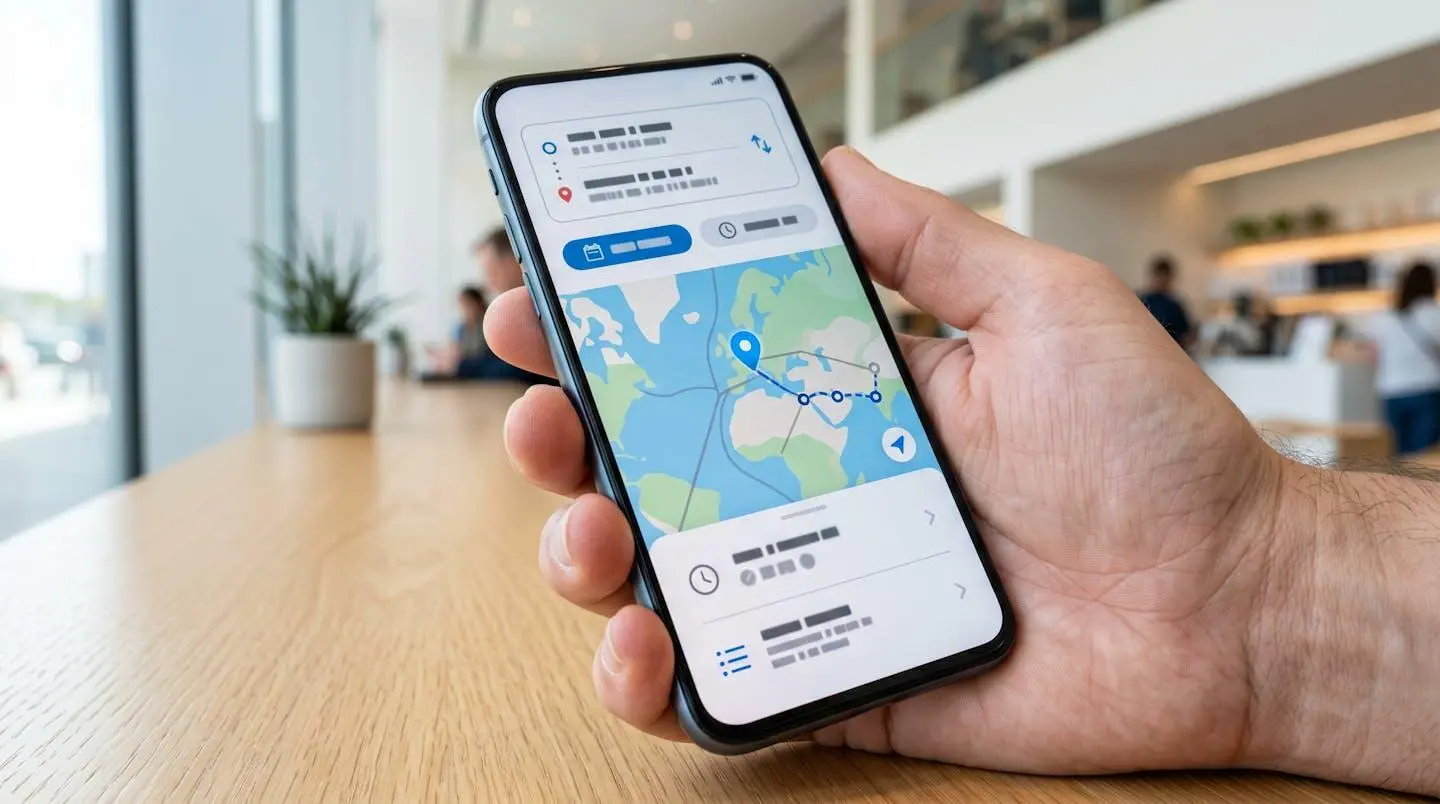
Mechanically, this intercity system operates two distinct routes connecting five major cities: the Green Route links Florence, Pisa, and Lucca, while the Terracotta Route connects Florence, San Gimignano, and Siena. Passes activate upon first scan and remain valid for 2, 3, or 5 consecutive days, allowing flexible scheduling. Modern buses feature free WiFi, accessibility accommodations for passengers with reduced mobility, and comfortable seating designed for journeys averaging two to three hours between cities. The integrated Tootie AI guide responds to traveler questions in real-time across 50+ languages—ask about restaurant recommendations in Siena, clarification on Medici history, or logistics for your next destination, and receive instant answers tailored to your query rather than generic recorded responses.
Operationally, this structure delivers three key benefits: hassle-free multi-city coordination without driving stress or parking fees, expert commentary that prevents the “pretty buildings with no context” syndrome common to independent travel, and seamless city exploration through Tootwalk audio walking tours included at each destination. Once you arrive in Pisa, for instance, the Tootwalk guide leads you through Piazza dei Miracoli with detailed narration about Romanesque architecture and Galileo’s experiments, then you reboard the bus for Lucca according to your preferred schedule. The entire system operates as a cohesive travel companion, not just a transportation provider.
Tootie: Your AI travel companion
Unlike traditional recorded audio guides that deliver fixed scripts, Tootie uses AI to answer your specific questions in real-time. Ask about history, restaurant recommendations, or travel logistics in any of 50+ languages. The technology transforms passive listening into interactive exploration, addressing the exact information gaps you encounter as they arise.
Main routes and destinations covered
The intercity service organizes its routes around two complementary options, each targeting distinct traveler interests and offering different cultural emphases. Choosing between them requires understanding not just which cities appear on each itinerary, but what those cities represent thematically and how much time you realistically want to spend in each type of environment. The routes aren’t interchangeable—one prioritizes iconic Renaissance landmarks and maritime history, while the other immerses you in medieval hilltop architecture and wine country traditions.
The Green Route connects Florence, Pisa, and Lucca—three cities that together tell the story of Tuscany’s Renaissance flowering and maritime power. Florence anchors the route as the region’s capital and birthplace of the Renaissance, home to the Uffizi Gallery, Duomo, and Ponte Vecchio. Pisa contributes its UNESCO-listed Piazza dei Miracoli, where the Leaning Tower, Cathedral, and Baptistery form one of Europe’s most photographed architectural ensembles, rooted in the city’s history as a dominant maritime republic. Lucca rounds out the itinerary with its intact Renaissance walls (now a pedestrian promenade encircling the historic center) and intimate piazzas that feel less tourist-saturated than Florence or Pisa. This route suits travelers prioritizing world-famous landmarks, religious art, and the scientific legacy of Galileo. The onboard commentary contextualizes the Arno River’s role in Florentine trade, explains why Pisa’s tower leans (unstable subsoil), and highlights Lucca’s unique survival as an independent republic until 1847.
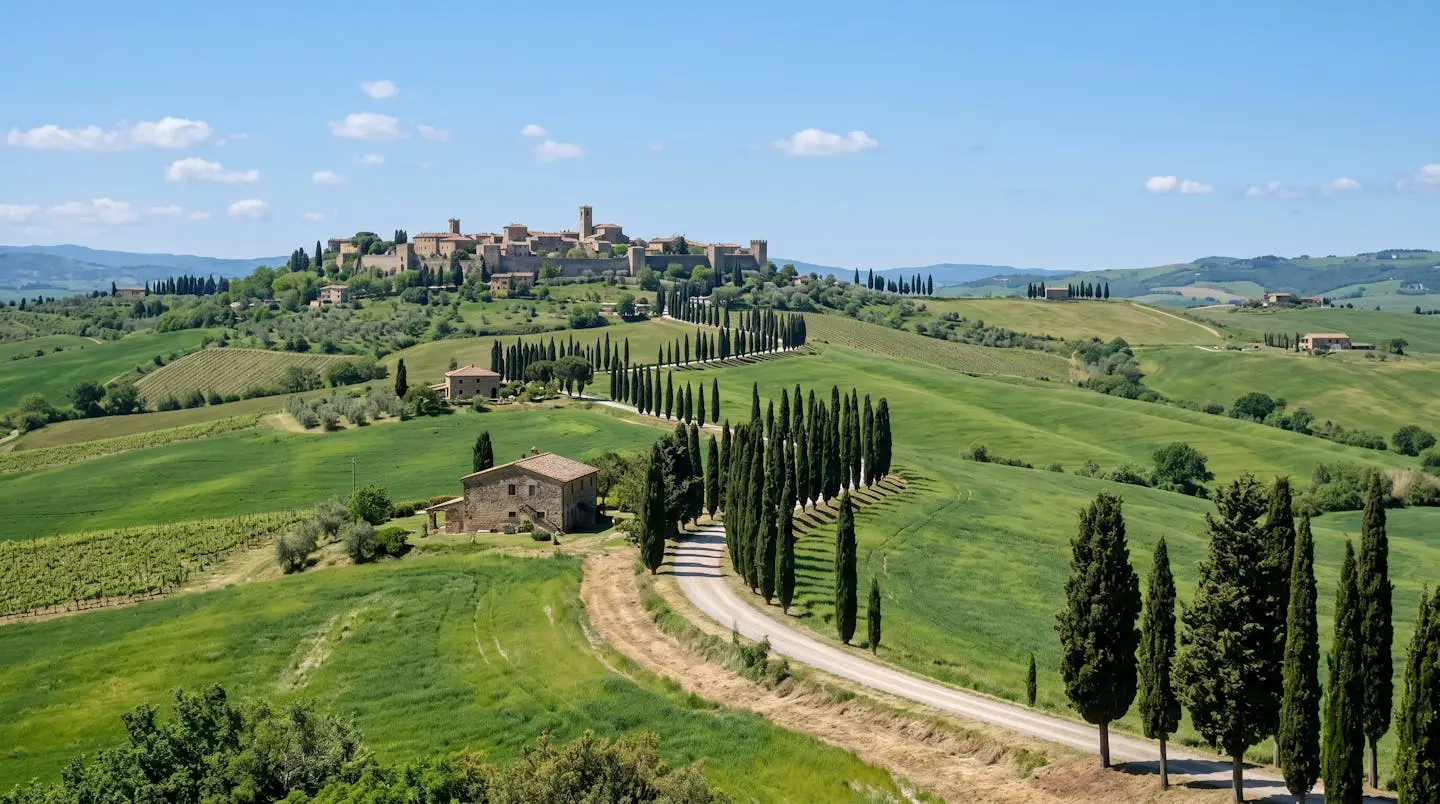
The Terracotta Route shifts focus to medieval hill towns and Gothic architecture, with a slower pace through Tuscany’s wine country. San Gimignano’s 14 surviving medieval towers create a skyline UNESCO describes as exceptionally well-preserved. Siena contributes its shell-shaped Piazza del Campo, site of the biannual Palio horse race, and a Gothic cathedral rivaling Florence’s Duomo in artistic ambition. The route travels through Chianti vineyards and rolling hills dotted with cypress trees, offering the quintessential Tuscan landscape many visitors envision. This itinerary appeals to travelers interested in medieval history, less-crowded environments, and wine culture context. The commentary explains feuding noble families’ tower-building competitions, Siena’s rivalry with Florence that shaped centuries of warfare, and the agricultural traditions sustaining hilltop communities.
The comparison below clarifies which route aligns with different traveler priorities. Each criterion reveals how the routes serve distinct cultural interests and trip structures.
| Criteria | Green Route | Terracotta Route |
|---|---|---|
| Cities covered | Florence, Pisa, Lucca | Florence, San Gimignano, Siena |
| UNESCO sites | Piazza dei Miracoli (Pisa) | San Gimignano historic center, Siena Piazza del Campo |
| Best for | Iconic landmarks, Renaissance art, maritime history | Medieval architecture, hilltop towns, wine country |
| Cultural focus | Science (Galileo), religious art, trade history | Gothic architecture, medieval towers, Palio tradition |
| Typical pace | Full day with flexibility for major sites | Full day, slower rhythm in smaller towns |
Planning your Tuscany bus tour: Passes and practical tips
Selecting the appropriate pass duration requires honest assessment of your total Tuscany time and travel pace preferences. The 2-day pass suits travelers spending three to four total days in the region who want to focus on one route plus deeper Florence exploration. This option works well for visitors combining Tuscany with other Italian destinations—you might allocate two days to intercity bus tours, then move on to Rome or Venice. The 3-day pass provides optimal balance for those with four to five days total, enabling both routes with buffer time for revisiting favorite cities or simply resting between intensive sightseeing days.
The 5-day pass targets visitors with six or more days who want maximum flexibility: completing both routes, returning to cities that captivated you, or exploring at a leisurely pace without schedule pressure. Passes activate upon first scan, so if you purchase a 3-day pass but don’t board until day three of your trip, you haven’t wasted value. The app displays real-time bus locations and departure schedules, allowing spontaneous decisions about which route to take on any given day rather than pre-booking specific time slots.
Consider the case of a traveler from New York with five days allocated to Tuscany. Using the 3-day pass, she completes the Green Route on Days 1-2 (Florence-Pisa-Lucca-Florence), dedicates Day 3 to the Terracotta Route (Florence-San Gimignano-Siena), then uses Days 4-5 for deeper Florence museum exploration and rest. This pacing avoids the exhaustion that accompanies rushed multi-city sprints while maximizing cultural immersion through varied experiences.
- If you have 2 to 3 total days in Tuscany:
Choose the 2-day pass and focus on one route (Green OR Terracotta) plus dedicated Florence time. Limited days mean prioritizing quality over quantity—one route allows unhurried city visits without exhaustion.
- If you have 4 to 5 total days in Tuscany:
Choose the 3-day pass to experience both routes with rest days in Florence or Siena. This provides optimal balance—you’ll see major highlights without rushing, with buffer time for deeper exploration or recovery.
- If you have 6 or more days in Tuscany:
Choose the 5-day pass for maximum flexibility. Complete both routes, revisit favorite cities, explore at leisure, and use Tootwalk extensively without time pressure. This duration transforms the bus service from transportation to true cultural immersion tool.
Practical boarding logistics are straightforward: download the provider’s mobile app before arrival, purchase your pass online or through the app, and present the digital ticket for scanning when boarding. Buses depart from designated stops in each city center (Florence’s main departure point sits near Santa Maria Novella train station). The real-time tracking feature eliminates anxiety about missing departures—you’ll see exactly where the next bus is and when it will arrive. If you’re planning a broader Italian adventure beyond Tuscany, this 4-day Italy itinerary provides a framework for coordinating multiple regions efficiently.
As ENIT‘s latest monitoring data documents, North American overnight stays in Tuscany rose 7.4% in 2024 compared to 2023, and jumped 20.2% versus 2019, confirming strong transatlantic interest. Many US travelers arrive with five to seven days allocated to Tuscany within longer Italian trips, making the 3-day or 5-day pass the sweet spot for balancing comprehensive coverage with relaxed pacing.
Your questions about Tuscany bus tours
How is an intercity bus tour different from a city hop-on hop-off bus?
Intercity buses travel between cities (Florence to Pisa, for example), while hop-on hop-off buses circulate within a single city with multiple stops. For Tuscany, where key attractions spread across different cities separated by dozens of kilometers, intercity tours prove more efficient for multi-city exploration. You can’t hop-on hop-off mid-route—the bus travels directly from city to city, with onboard commentary during the journey.
Can I explore cities independently after arrival?
Yes. Once you arrive in a destination city, you have free time to explore at your own pace. Use the included Tootwalk audio walking tours for guided city exploration, visit museums independently, or simply wander. Then board the next scheduled bus departure according to your preferred timing. The multi-day pass allows complete flexibility in how long you spend in each city.
Do I need to book specific departure times?
Your pass remains valid for the selected number of days (2, 3, or 5) from first activation. Check route schedules through the app and board any departure that fits your itinerary—no advance reservation for specific time slots required. The app shows real-time bus locations, helping you coordinate departures with your city exploration schedule.
Is the audio guide actually useful or just generic information?
The commentary provides historical context, cultural insights, and local anecdotes specific to the regions you’re passing through—explaining, for instance, why certain villas appear along the route or how the landscape shaped agricultural traditions. Beyond the recorded guide, Tootie AI answers your specific questions in real-time, making the experience interactive rather than passive. Ask about restaurant recommendations in Siena or clarification on Medici history, and receive tailored responses in your language.
Are the buses accessible for travelers with mobility challenges?
Yes, the buses are modern, accessible vehicles designed to accommodate passengers with reduced mobility. The vehicles feature accessibility accommodations meeting contemporary standards. Contact customer service in advance if you have specific accessibility needs requiring pre-boarding coordination or assistance.
Intercity bus tours address a specific travel challenge: efficiently visiting multiple iconic Tuscany cities with meaningful cultural context, without the stress of driving Italian roads or juggling complex train connections. For US travelers working with limited vacation time—typically one to two weeks for an entire European trip—guided intercity bus tours transform potentially stressful logistics into seamless cultural immersion. The combination of expert commentary, multilingual AI support, and integrated city walking tours converts what could be wasted transit hours into valuable learning time, while the multi-day pass structure provides the flexibility independent travelers crave without the isolation that sometimes accompanies fully self-guided exploration.